Spendly Budget
A production-ready budgeting product I shaped from product and interface decisions through full-stack delivery and a practical AI integration.
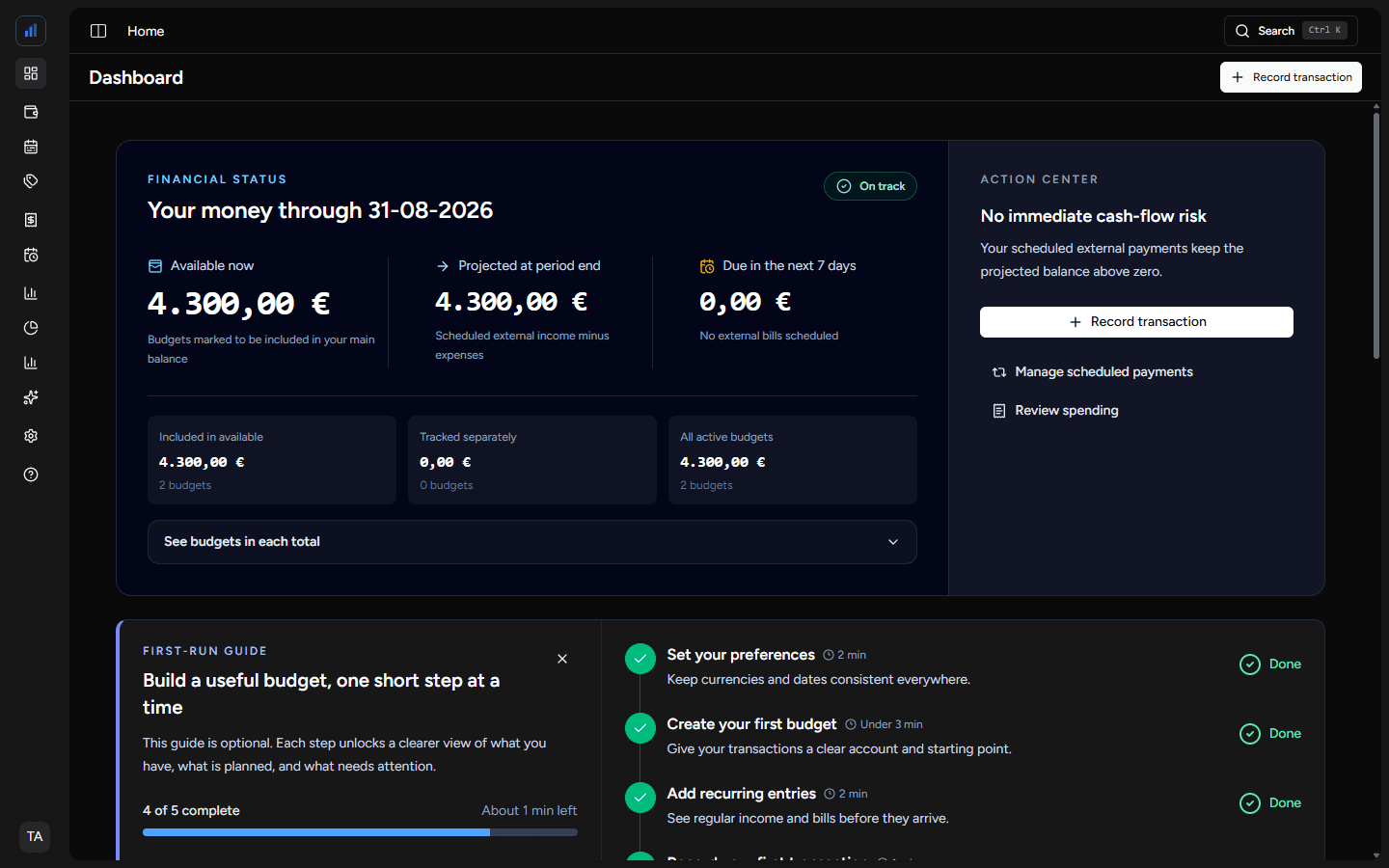
Ownership
From product direction to operating software.
The problem
Personal budgeting is not only a record of what already happened. People also need to understand upcoming income, recurring costs, savings, and how those decisions change the balance ahead.
My role
I created Spendly end to end, moving between product decisions, UX, application architecture, frontend and backend delivery, deployment, and the integration boundaries needed for AI access.
A product built around real cash flow.
The core experience connects day-to-day money movement with a forward view, so planning and recorded activity stay part of the same product model.
Multiple money contexts
Separate budgets can represent personal spending, household needs, savings, or other financial contexts without mixing their balances.
Planning ahead
Future payments and recurring entries turn the budget into a cash-flow forecast instead of a static expense history.
One connected view
Consolidated reporting brings selected budgets together while keeping their original financial context clear.
AI integration
One user context from ChatGPT to Spendly.
The GPT can work with a user's Spendly finances through an MCP connection, but only after that user authorizes access through the OAuth flow. The integration does not depend on a shared account credential.
01 · Ask
Start in ChatGPT
A user opens the dedicated Spendly GPT and asks to review or manage their budgeting information.
02 · Authorize
Connect with OAuth
Spendly establishes the authorization context for that user, with connected access visible and revocable in the product.
03 · Act
Use the right context
MCP operations run within the authorized user boundary, keeping identity, permissions, and product data connected.
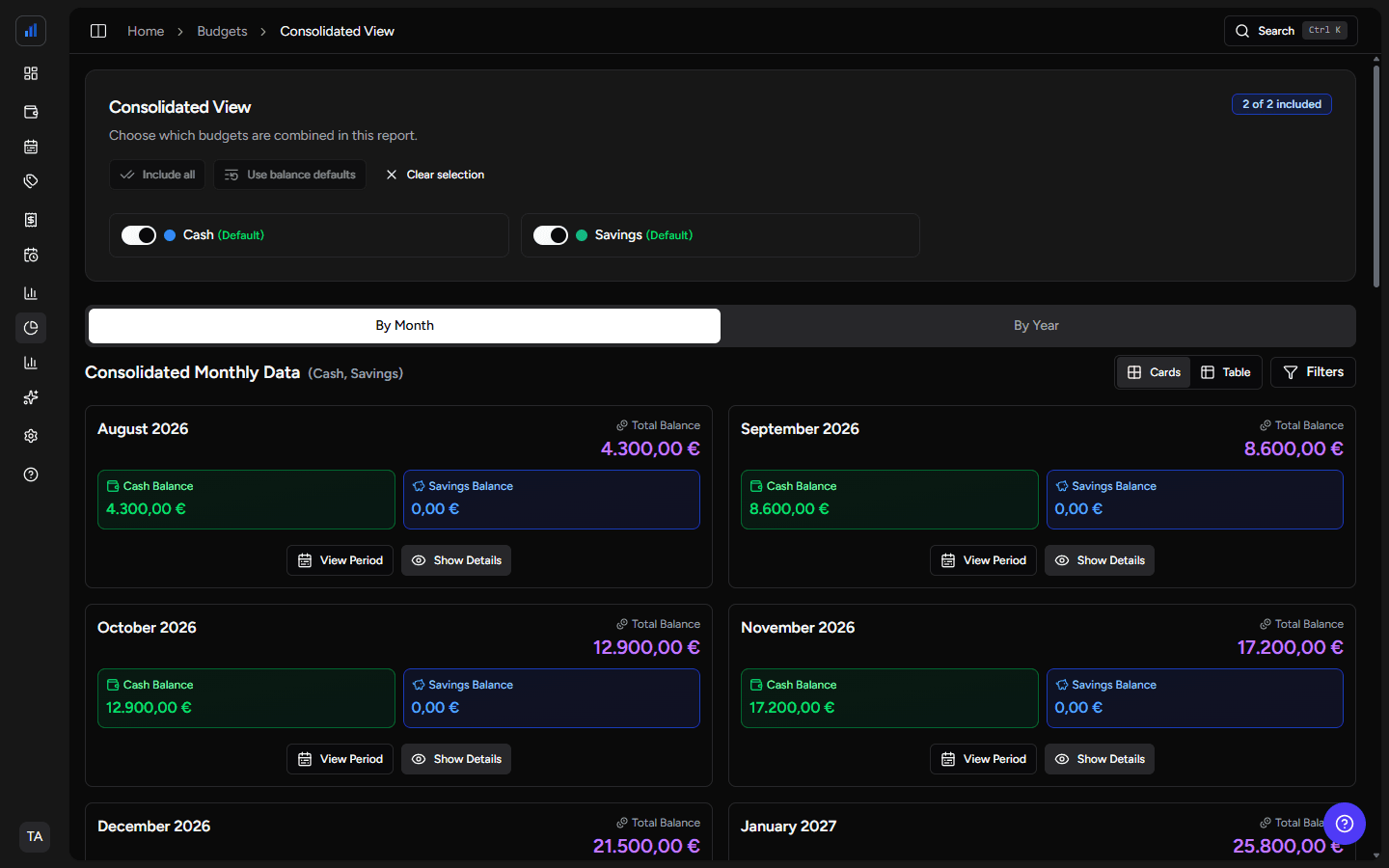
Planning remains useful beyond one budget.
The consolidated view preserves the distinction between budgets while showing their combined direction over time. It is a product decision that connects data architecture with a clearer planning experience.
Result
Spendly is a complete, deployed product direction spanning finance workflows, responsive interfaces, application services, analytics, and an AI integration.
Learning
AI features become more trustworthy when identity, permissions, and product context are designed together from the beginning rather than added after the model interaction already exists.
Need a product that connects the workflow and the AI layer?
I work across product direction, full-stack implementation, integrations, and delivery boundaries.